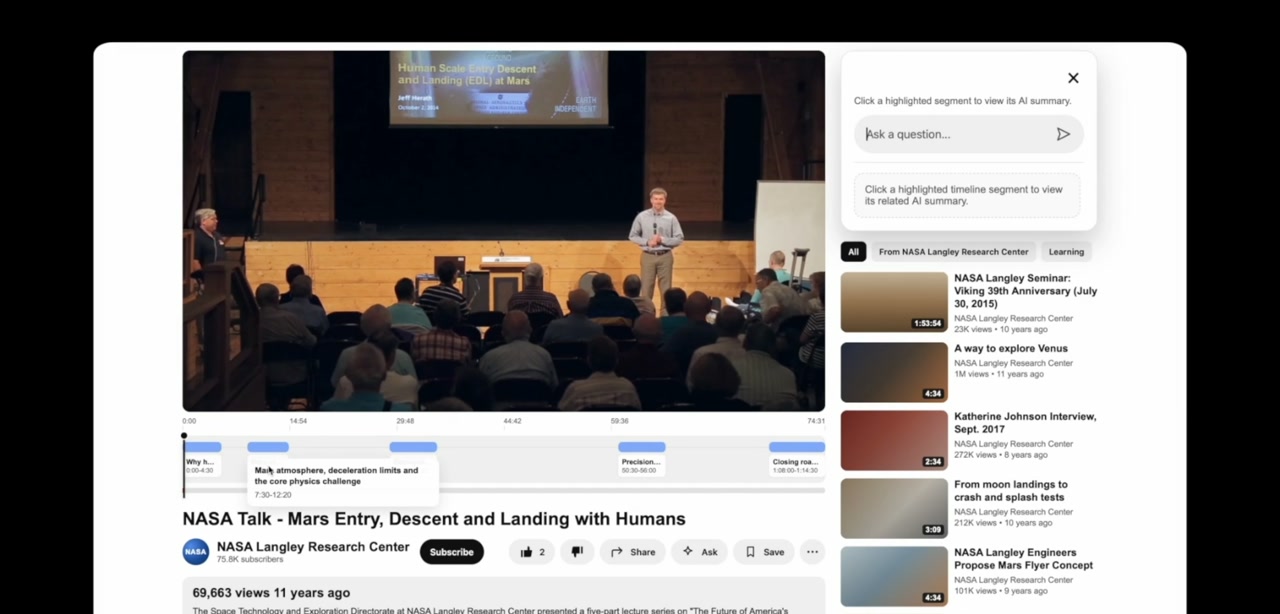
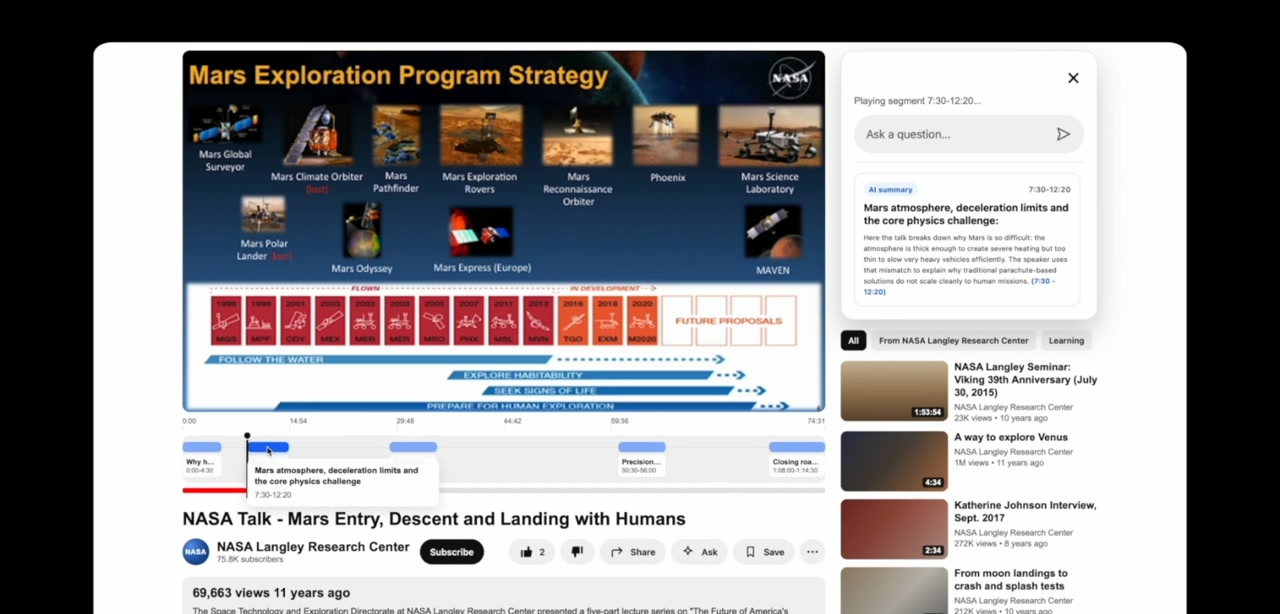
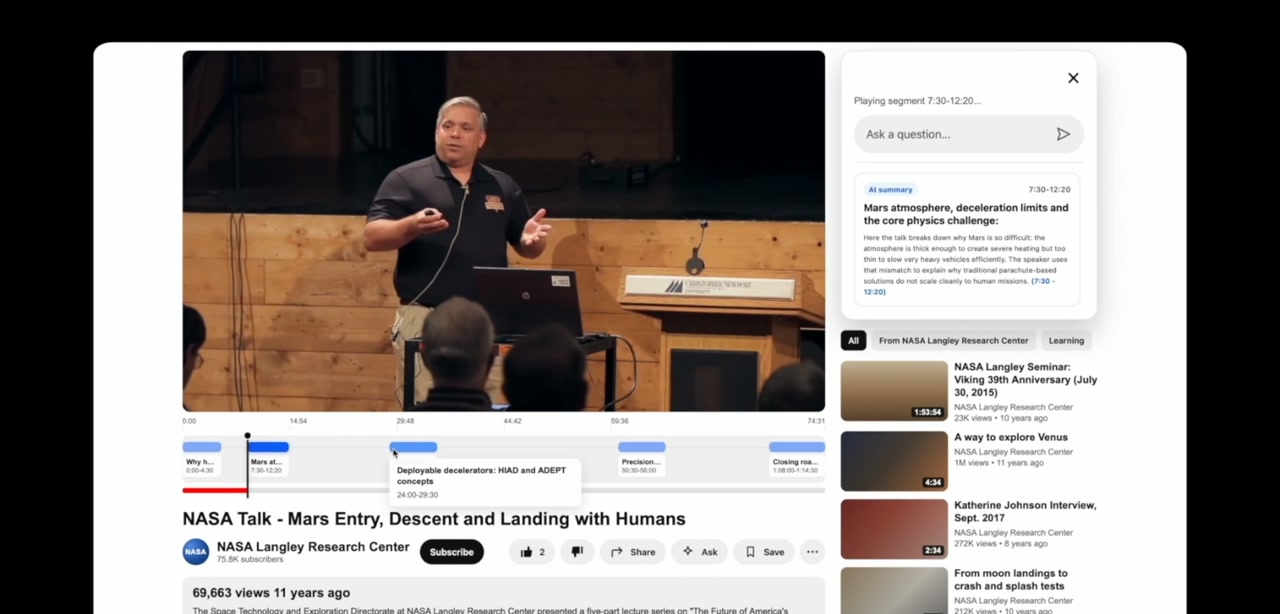
A working prototype of the interaction inside YouTube, on a 74 minute NASA talk. Click a step.
Ask a question about a video. Land on the moment that answers it.
A working prototype of the interaction inside YouTube, on a 74 minute NASA talk. Click a step.
Why it matters
A document has headings, paragraphs, a table of contents. Video only has time.
So when the thing you need is somewhere inside 74 minutes, your only tool is the scrubber.
You drag, you guess, you overshoot, you drag back. Prompted Find replaces that with a question.
It’s for anyone who has to pull information out of recorded talks:
students, researchers, and anyone catching up on a meeting they missed.
The idea
Semantic decomposition. Break long content into labeled units of meaning, so a question can return a location instead of a summary.
Scroll to see the full span →
A transcript gives you every word and no shape. A summary gives you shape and takes away the source. Labeled segments give you both, and they give you somewhere to point.
Where else it works
Anything long with no structure: podcasts, recorded meetings, interviews, legal proceedings. The medium changes. The interaction stays the same.
What’s next